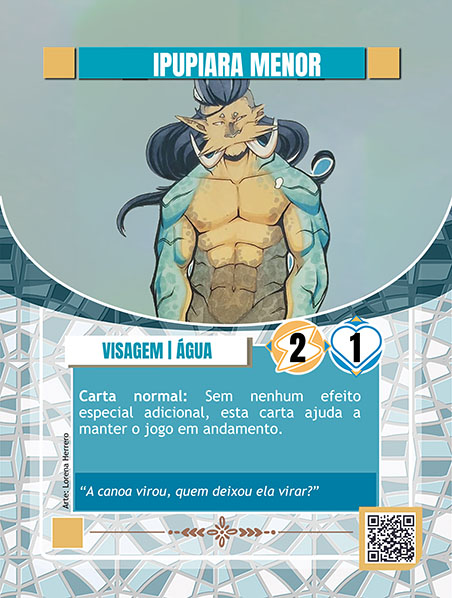
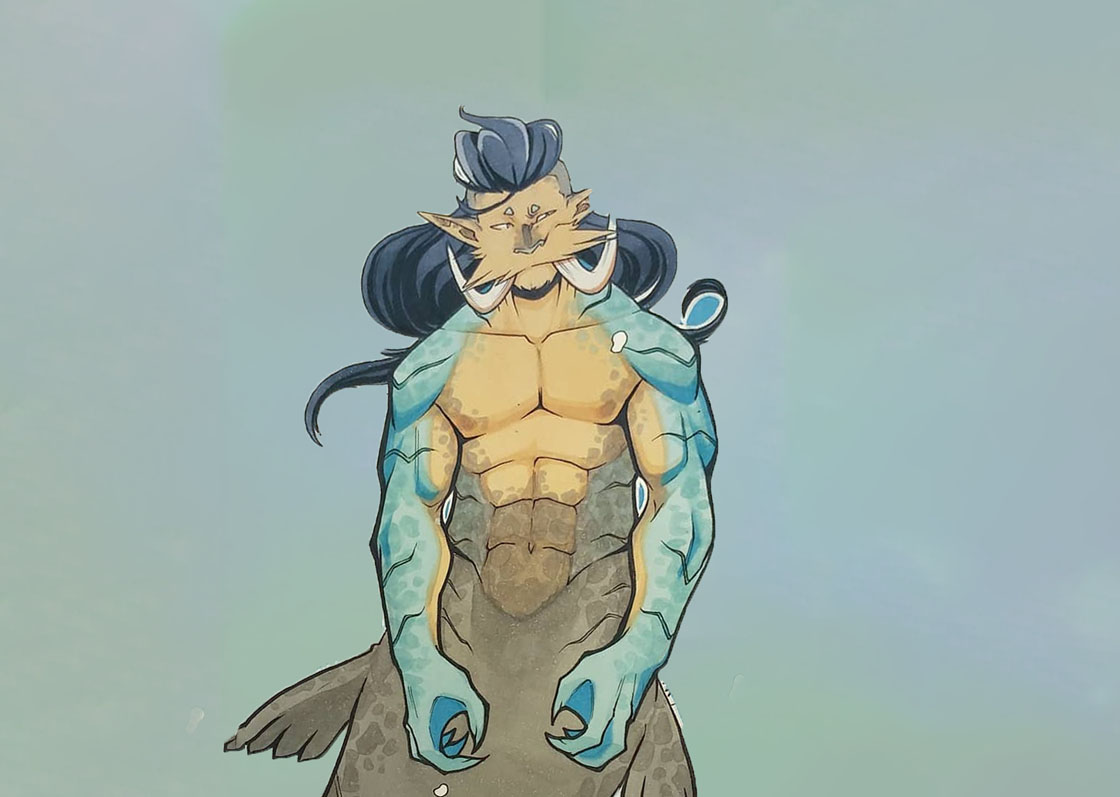
The Ipupiara is a being from indigenous narratives that threatens anyone who approaches the waters. Also called Igpupiara, Hipupiara, or Upupiara, it became known as the "Lord of the Waters" and "Sea Man." Fishermen, shellfish gatherers, washerwomen, and bathers were among its victims.
Descriptions and methods of attack
Descriptions vary according to the record. The monster narrated by Pero de Magalhães Gândavo had a body covered in fur and bristles on its snout similar to whiskers. Fernão Cardim describes sea men of good stature and deep-set eyes. The female figures, according to the Jesuit, were beautiful and had long hair. Cascudo also mentions a record by Martius with feet turned backward or a third thigh coming out of the chest. The folklorist considers that this description may result from a confusion with the Curupira.
In Cardim's record, the attack came through a hug. The monster would squeeze and kiss its victim until it crushed her. Upon realizing she was dead, it would let out groans and abandon her. When it carried the body away, it would devour the eyes, nose, fingertips, toes, and genitals. Although Cardim describes beautiful female figures, in this passage the encounter occurs through attack.
Colonial Encounters and Records
The beast, however, could be wounded. Gândavo recounts an episode set in São Vicente in 1564. The first to see the monster was an enslaved indigenous woman, who left her house at night and noticed the creature near the sea. She warned Baltazar Ferreira, the captain's son. He initially doubted the account and ordered the woman to return to check.
When she returned and insisted on the warning, Baltazar went out with a sword. Upon approaching, he saw the monster heading towards the sea and blocked its path. He wounded him in the stomach and head. Other enslaved people rushed to the woman's cries and took the creature, already almost dead, to the village. According to Gândavo, the monster was fifteen spans long and was left exposed to the inhabitants' view the next day.
Cascudo also recalls a record by Father Simão de Vasconcelos about caves by the sea with bones and skulls attributed to "fish-men". According to this account, the skulls had a single opening at the back of the head, through which these beings would breathe.