The Sword Dance
Reisado is the broad term used to refer to a series of traditional festivals and events. Renato Almeida, in a passage reproduced by Lívia Petry Jahn (2015, p. 30), summarizes it as: “[…] all the groups of revelers who, with or without dances and dramatic dances, go out to celebrate not only the Kings, but the previous festivities of the 12-day cycle”.
The broad description helps to understand the complexity of this manifestation. Revelries in remembrance of the three wise men will be crossed by other traditions, such as Bumba Meu Boi or the festivals of the King of Congo.
Abelardo Duarte, in a passage from Black Folklore of Alagoas reproduced by Lívia Petry Jahn (2015, p. 30), reinforces the difficulty of distinguishing the practices: “In Alagoas, congos, reisados and bumba-meu-boi… it was all one thing”. The result of these mixtures will vary greatly from community to community.
Kings, armies and symbolic disputes
Considering the legacy of the King of Congo festivals, it is in this group that we find the dramatic dances whose narrative leads to the coronation of a mythological African monarch.
In certain regions, the event may simply indicate the arrival of the distinguished king in Brazil, celebrated by the population with festivities. In others, it represents the dispute between two majesties or their ambassadors. As a celebration of this moment of confrontation, the dynamics of the sword game emerge.
That is why we have a whole structure of a fantastic army, with the participants usually dressed in clothes that resemble armor and ornate helmets. The sword game is the moment of symbolic dispute, permeated by popular culture. The swords clash amidst dance and swaying movements, following the rhythm.
The tradition is well-known. Cascudo says: “On the way there and back, the procession performed dances, games of agility and warrior simulation, clashing of bladed weapons, and sword dances.”
The sword game outside the procession
One of the amusements of the Reisado performers in Cariri (Ceará) that went viral, however, is playing the sword game without the other costumes.
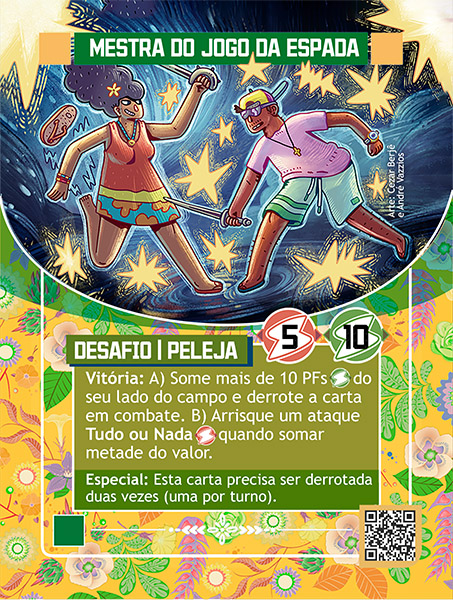
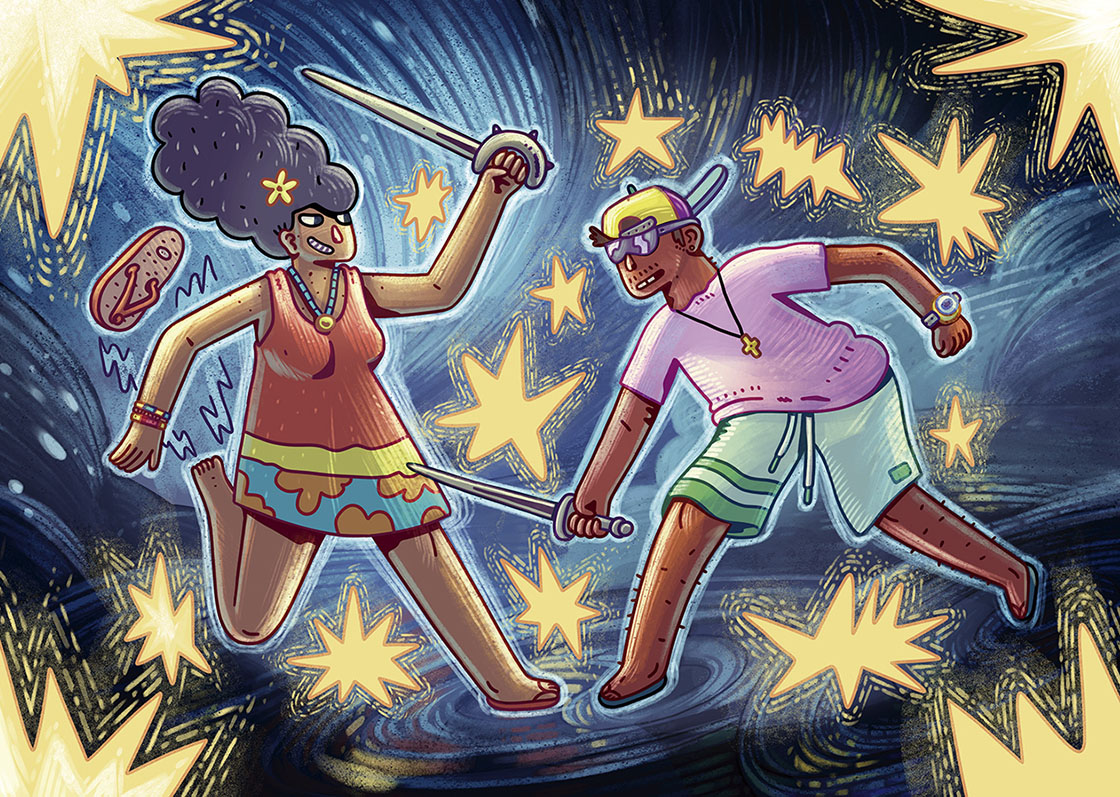
The scenes are fabulous: people in everyday clothes vigorously fighting with their sabers, while dancing to the music.
The media-covered performance was an action by Mestra Flatenara, from the Reisado Mirim Santo Expedito, and Mestre Cicinho, from the Reisado Manoel Messias. Both are father and daughter and show the ways in which the tradition remains.