
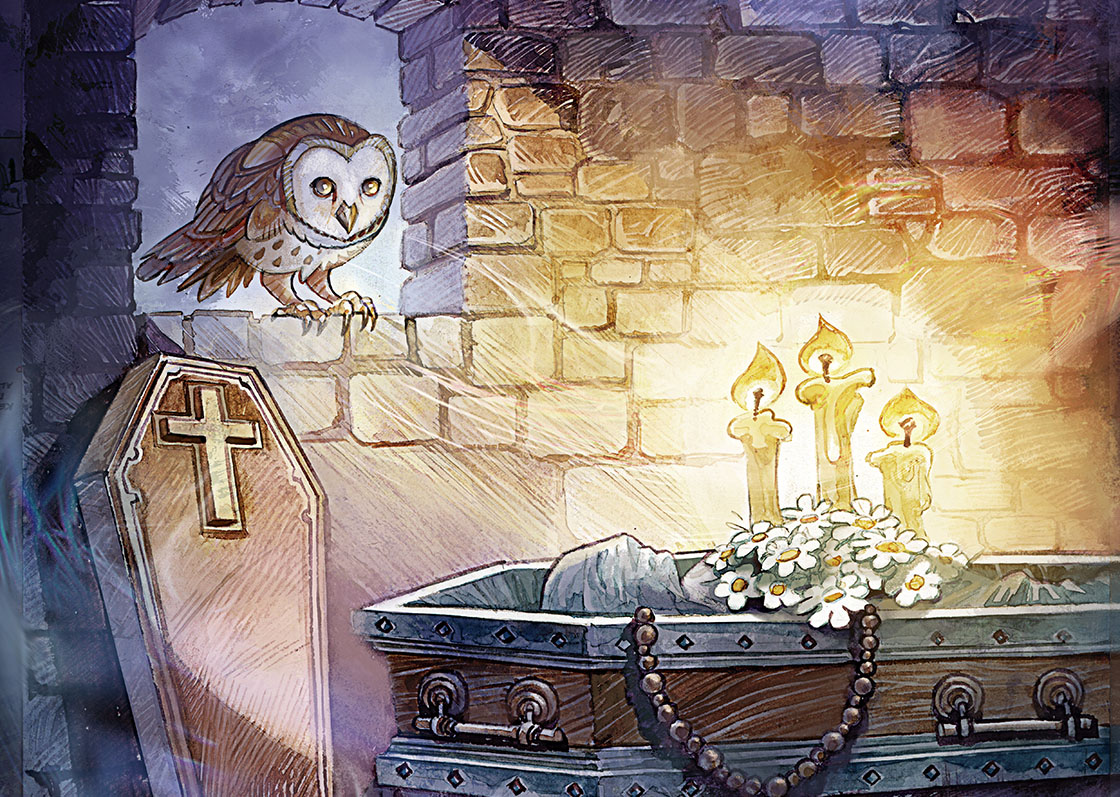
Illustration by André Vazzios
Rasga Mortalha
Folklore and history
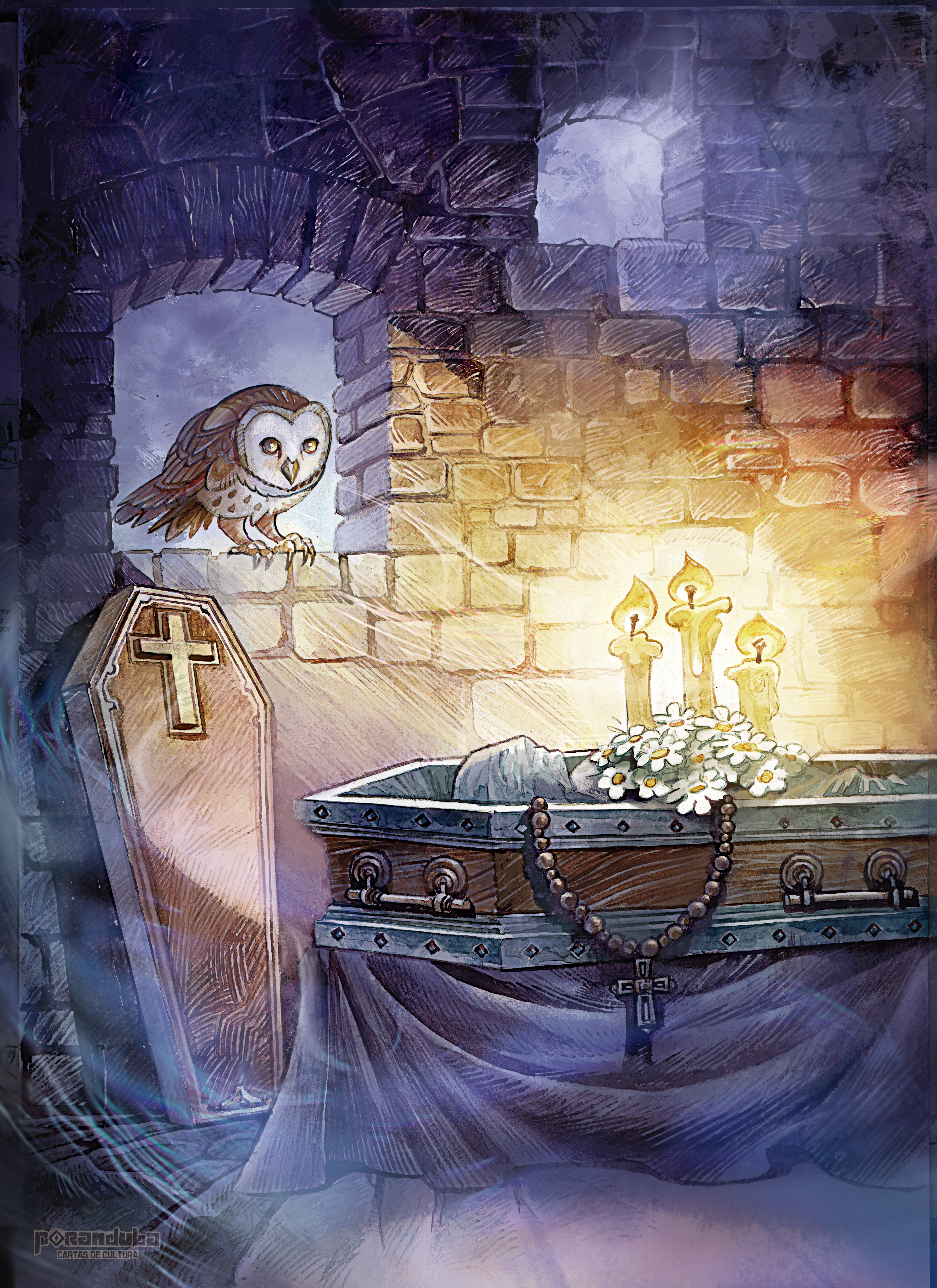
Barn Owl, Suindara, Church Owl. All are names for the same animal; a white owl with a pointed tail, whose scientific name is Tyto Furcata. The popular name by which it is known is due to the sound of its song, shrill and mournful, which resembles the sound of fabric tearing. What fabric? The shroud; the blanket that covers corpses during the funeral.
They say that this bird has an ominous song, which announces the death of someone in the family. It is common to have Suindaras scared away, to prevent someone sick in the house from getting worse from one moment to the next. Just don't hurt the little animal, okay? If you want to scare away a Barn Owl, just chant "Long live the newlyweds!", and it will go away.
Owls and the Supernatural
The relationship between owls and the supernatural, however, is not exclusive to this species; it is found in the very scientific name that characterizes the family of these animals. There are two, the Tytonidae (where the Barn Owl is found) – which comes from the Greek onomatopoeia for owl, tyto (τυτώ), and the so-called “true owls”, which are from the Strigidae family. The name comes from “Strix” or “Strig”, a mythological monster. The name refers to Greek mythology and is linked to a curse. It is said that Polyphon was a beautiful young woman who, despite her stunning beauty, preferred to follow the huntress goddess Artemis instead of the beautiful Aphrodite. Polyphon left her parents' home and decided to live in the mountains; and, in some versions, she does so to remain a virgin.
Irritated, Aphrodite casts a spell on her, causing her to give herself to bears, with whom she copulates and becomes pregnant. Disgusted, Artemis also rejects her, which causes the woman to return to her parents' house and give birth to two man-eating giants. When the gods decide to put an end to that situation, Ares suggests that the family be transformed into birds. Polyphon thus becomes a Striga – a large owl, whose presence brings bad omen and indicates the proximity of war. In Ovid, it is also said that the Striga would suck the blood of children, haunting them at night.
The bird and the figure of the witch
This imaginary ballast brings many elements closer together, such as the figure of the witch itself. Narratives of witch-women capable of transforming themselves into birds, especially owls, are frequent. At the same time, it is also said that a child who does not develop, who is sickly, is suffering from "witchcraft," caused by the frequent visits of witches during the night.
In our country, a clear example of this transformation is Matinta Pereira. Although there is a bird with this name, from the cuckoo family, and from which the whistle of the apparition is derived, it is common to say that the witch Matinta turns into a black bird (like a crow) or even a Rasga-Mortalha. In Mexico and on the border with the United States, there is much talk of Lechuza.
Between the omen and the protection of the owl
Cascudo records, in the entry for “Owl”, in his dictionary: “Boy, I remember the shooting carried out by the servants alarmed by the insistent hooting of an owl, while my father was bedridden. Finally, they brought the dead bird, its large eyes open, to the sick man's room, with cries of relief: ‘It was you who died, you omen!’. My father died forty years later. Like every old backwoodsman, he said he didn't believe in the owl's hooting, but he didn't like to hear it.”
Today, much awareness work is being done so that these animals are not killed indiscriminately. Anyone who wants to get rid of the animal should perform an incantation. The owl is a great hunter of rats, snakes, and an ally of humans in controlling these animals.

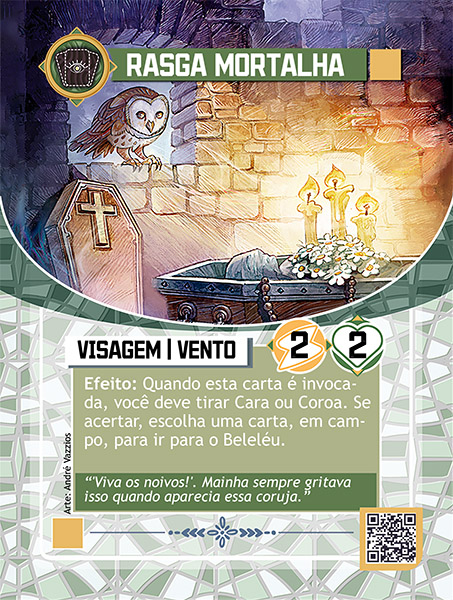
Rasga Mortalha
Strength: 2
Health: 2
Wonders / Wind
“‘Long live the newlyweds!’ Mama always called that out when this owl appeared.”
Bad Omen · Evil Eye
When you summon this card, call heads or tails and flip the coin. If you call it correctly, choose a card on the field and send it to the Beleléu (your discard pile).
Download the high-resolution artwork
References
- CASCUDO, Luís da Câmara. Dicionário do Folclore Brasileiro. São Paulo: Global, 2002.
- OLIPHANT, Samuel Grant. The story of the strix: Ancient. Transactions and Proceedings of the American Philological Association, v. 44, p. 133–149, 1913. DOI: 10.2307/282549. (www.jstor.org)
- SANTOS, Carlos et al. Do mau agouro à arte: a coruja no imaginário popular. Revista de Educação do IDEAU, v. 10, n. 22, 2015. (www.academia.edu)