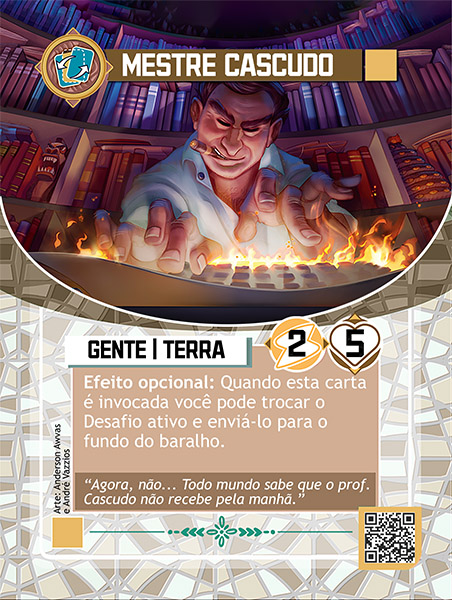
Luis da Câmara Cascudo (1898-1986) was one of the most important Brazilian folklorists, historians, and writers. Of all the roles for which he became known, he chose one to definitively present himself as: "professor".
Family and political participation
Cascudo was born in Natal, in the state of Rio Grande do Norte, and dedicated his life to the study and research of Brazilian cultural traditions, especially those of the Northeast of the country. His distinguished surname was actually a nickname added to the family name. It came from his paternal grandfather, Antônio Justino de Oliveira (1829-1894), a staunch monarchist, a member of the conservative party – there called the “Cascudo Party”. Old Cascudo was the patriarch of the family that adopted this patronymic.
Despite his political background, Cascudo was not very fond of public life. In 1930, he was elected state deputy for the Republican Party, only to lose his mandate 5 days after the 1930 coup, which dissolved the Legislative Assembly. At the invitation of Gustavo Barroso, he took part in the Integralist Movement – of fascist inspirations – between 1933 and 1937. Disappointed with the Integralist ideology, he abandoned it and developed an aversion to any political-party participation.
A life dedicated to popular culture
A scholar always attentive to the things of the people, Cascudo understood folklore as the mother's milk of his literature. From the stories of the farm workers, of the farmhands during "coffee and poranduba" hours, he built the foundations for his studies.
His masterpiece, indisputably, is the "Dictionary of Brazilian Folklore". Released in 1954, it compiles 10 years of research dedicated to popular cultures. He also published, among others, "Geography of Brazilian Myths" (1947) and the monumental "History of Food in Brazil" (1963).