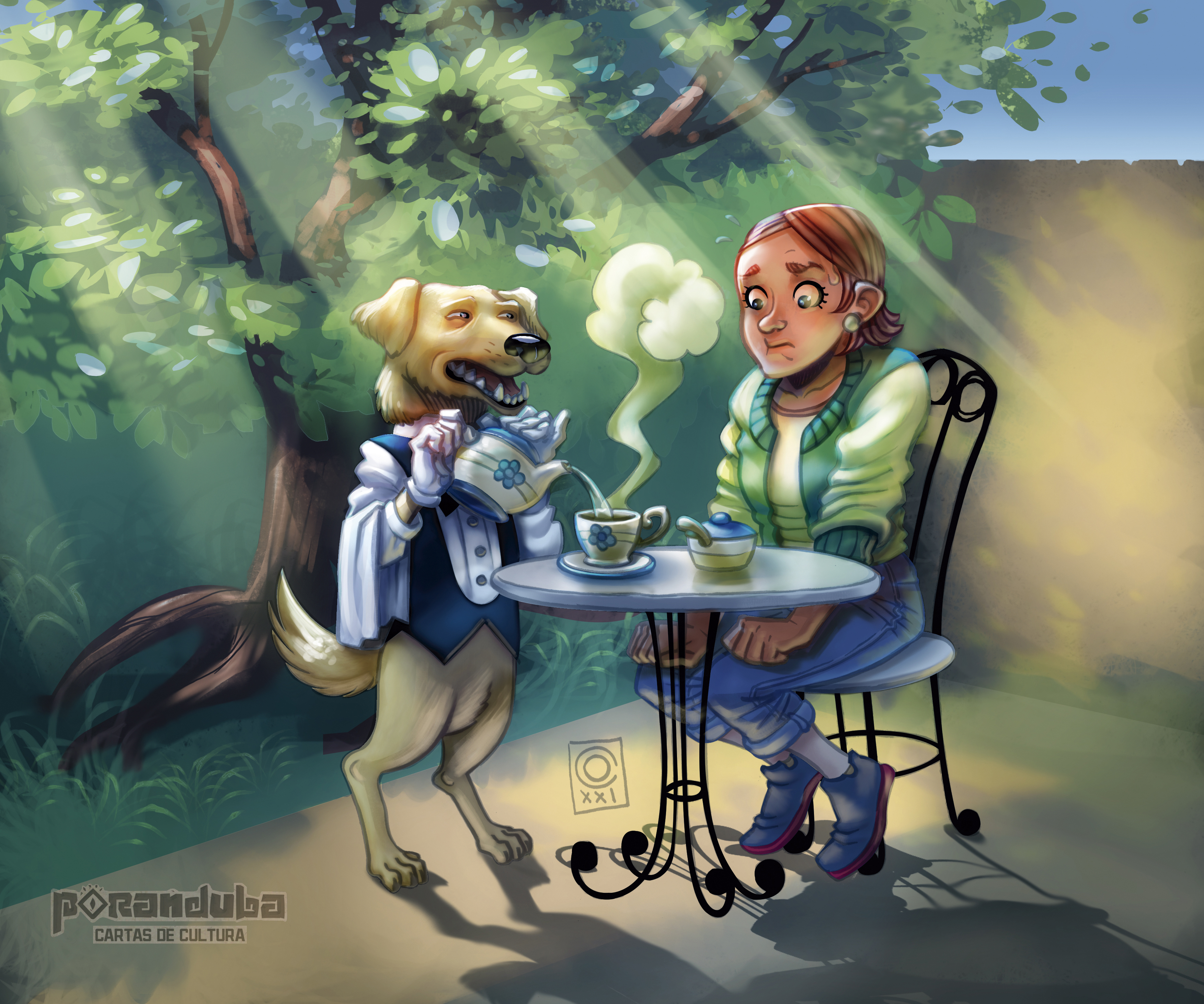
“Dog jasmine” is a rather poetic way in which people usually name dog excrement which, when well dried, turns white and crumbles. The color, in this way, resembles that of jasmine flowers – very white, scattered around. In Paraguay, it is also called “field sugar”.
Records of folk medicine
In folk medicine, “dog jasmine” appears in the form of tea. The accounts describe the collection of the excrement and the preparation of an infusion, consumed immediately afterwards. She was believed to have the power to treat respiratory illnesses, especially tuberculosis and whooping cough.
Another form of preparation was as a syrup or cough syrup; jasmine, in this case, was widely used in cases of pleurisy, bronchitis with bloody sputum. It is also used against measles. It is said that, during smallpox epidemics, it was the holy remedy of folk medicine. Cat feces, dissolved in wine, is also mentioned in some records.
Practices recorded by Mário de Andrade
It is a mistake to think that this was a practice only of the common people. Mario de Andrade reports that even at the beginning of the 18th century, the physician of King João V, Dr. Francisco da Fonseca Henriques Transmontano, advised in his medical books the use of both jasmine tea and another therapy very common in Portuguese therapeutics of the time: the urine elixir.
In an article entirely dedicated to the medicine of excrement, Mário de Andrade compiles some practices from colonial times. Donkey or ox dung, dried and crumbled, for example, was widely used to stop bleeding from cuts.
Following the Portuguese tradition, urine was also used in Brazil. One of the recorded practices was to apply the urine of a child of the opposite sex to the injured person to a three-day-old wound.
A narrative about horse urine
It is said that when Jesus was born, it was very cold and the ox approached to breathe on him to warm the child. Then the donkey came and devoured all the grass in the manger, indifferent. Our Lady then cursed the donkey and also the horse, which is its relative. This is how the tale explains the belief that stepping in horse urine causes "pissing" — the name given to a kind of abscess on the soles of the feet.