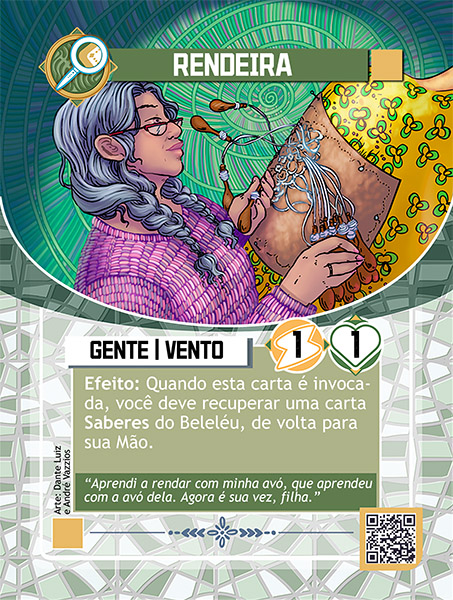
Lacemaker
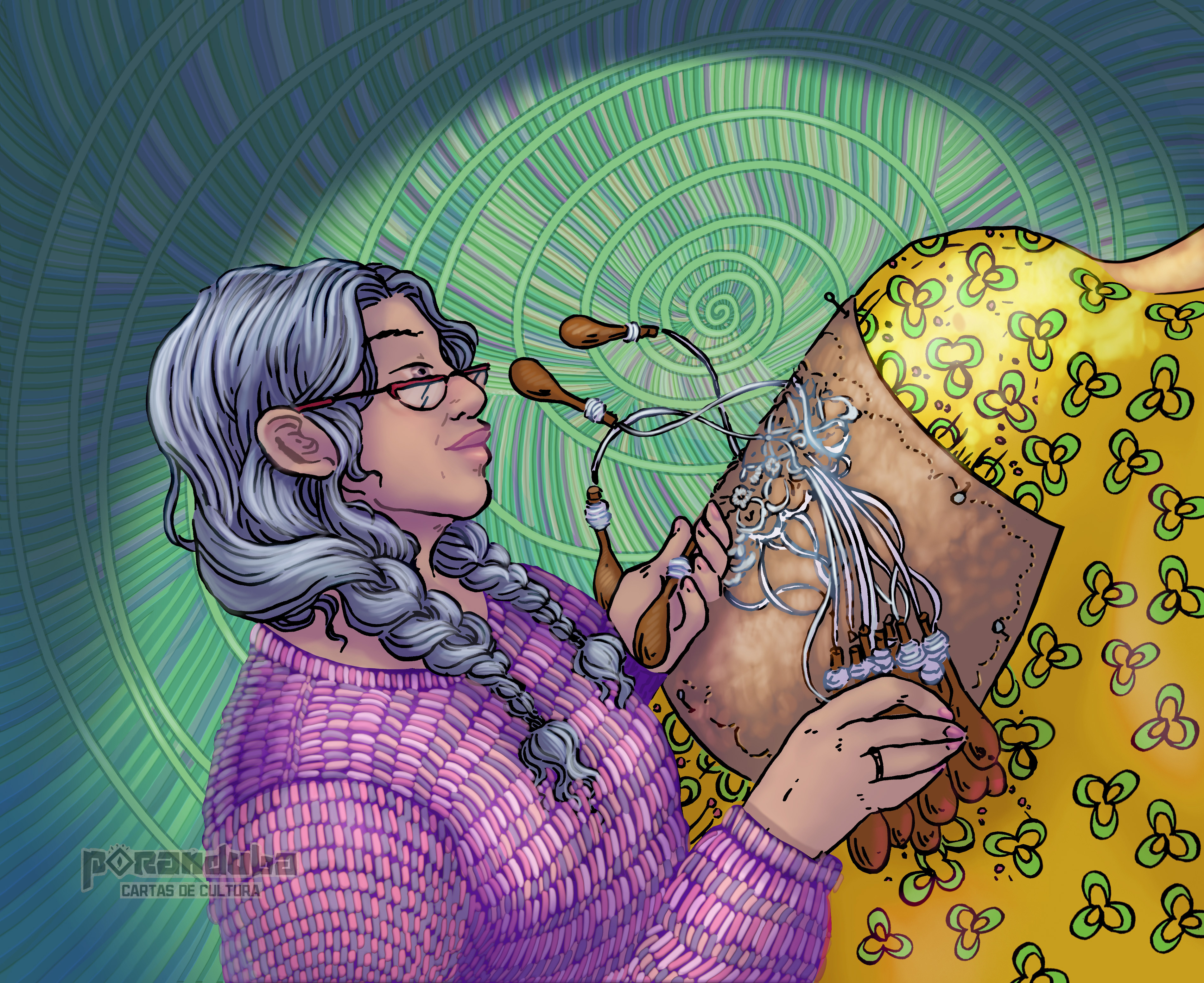
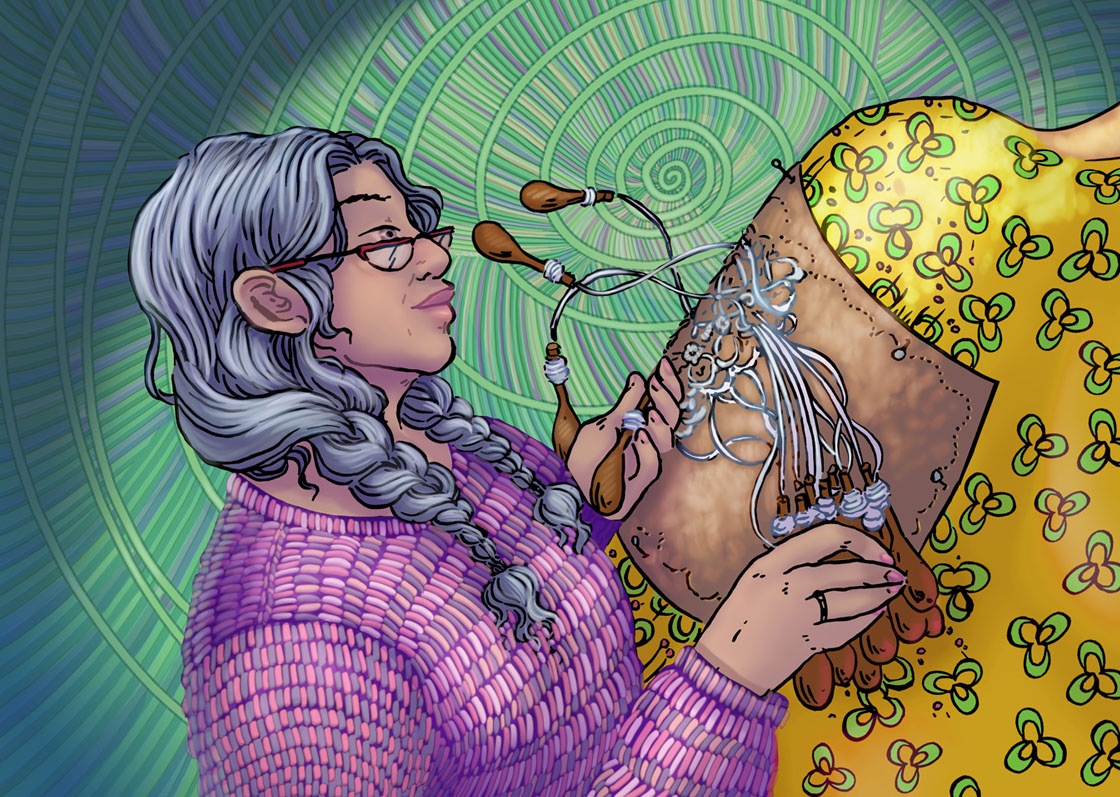
Delicate patterns that spread across dresses, towels, accessories… The craft of bobbin lacemaking has a history spanning more than four centuries in Brazil. And it remains quite alive, especially in coastal regions. Our bobbin lace tradition came from Portugal, which received it, in turn, through cultural exchanges with Flanders, Italy, and the influence of travels to the East.
Bobbins, patterns, and stitches
The bobbins mentioned are small wooden sticks around which the threads are wound. The lace is produced on a cushion filled with sawdust, cotton, or even banana fiber. The patterns from which the lace will be traced, the "pattern," are placed on top of the cushion. Traditionally, the pattern was made of paper or cardboard, but today it is common to use a photocopy on tracing paper. Maintaining the communal practice of popular culture, the exchange of patterns among the artisans helps the technique to spread.
There are several types of stitches (or sets of stitches) made in bobbin lace. The nomenclature varies from region to region, but we have full leg or moth, brick, beetle, shell, spider, closed cloth, open cloth, and so on.
Lace in history
One of the oldest records of this technique dates from the 16th century, in a book published in Zurich. We find bobbin laces named in various ways in other countries, such as Genoese lace, Milanese lace, Venetian lace, among others. One of the most famous bobbin laces is Chantilly lace, which was a favorite of Queen Marie Antoinette (1755-1793).
A curious historical event occurred in 1749. Faced with a rampant economic recession, caused by the decline in gold production in the colonies, the Portuguese government issued a new decree controlling customs – the so-called “Pragmatics”. The text of the law prohibited the ostentation of luxury items: jewels, crystals, precious stones… and lace.
The prohibition was a hard blow for Portuguese artisans, who organized themselves politically. The lacemakers made a petition, justifying the serious commercial losses for the country. And they sent a representative to discuss it at court: Joana Maria de Jesus, from Vila Conde. In the same year, a decree relaxed the situation.
The bobbin in folk charms
To encourage a child to start speaking, people are said to have offered the child water in which a rattle or a lace bobbin had been soaked. Cascudo explains the reasoning in terms of sympathetic magic: the bobbin is always moving, and drinking the water is supposed to set the vocal cords moving too.