
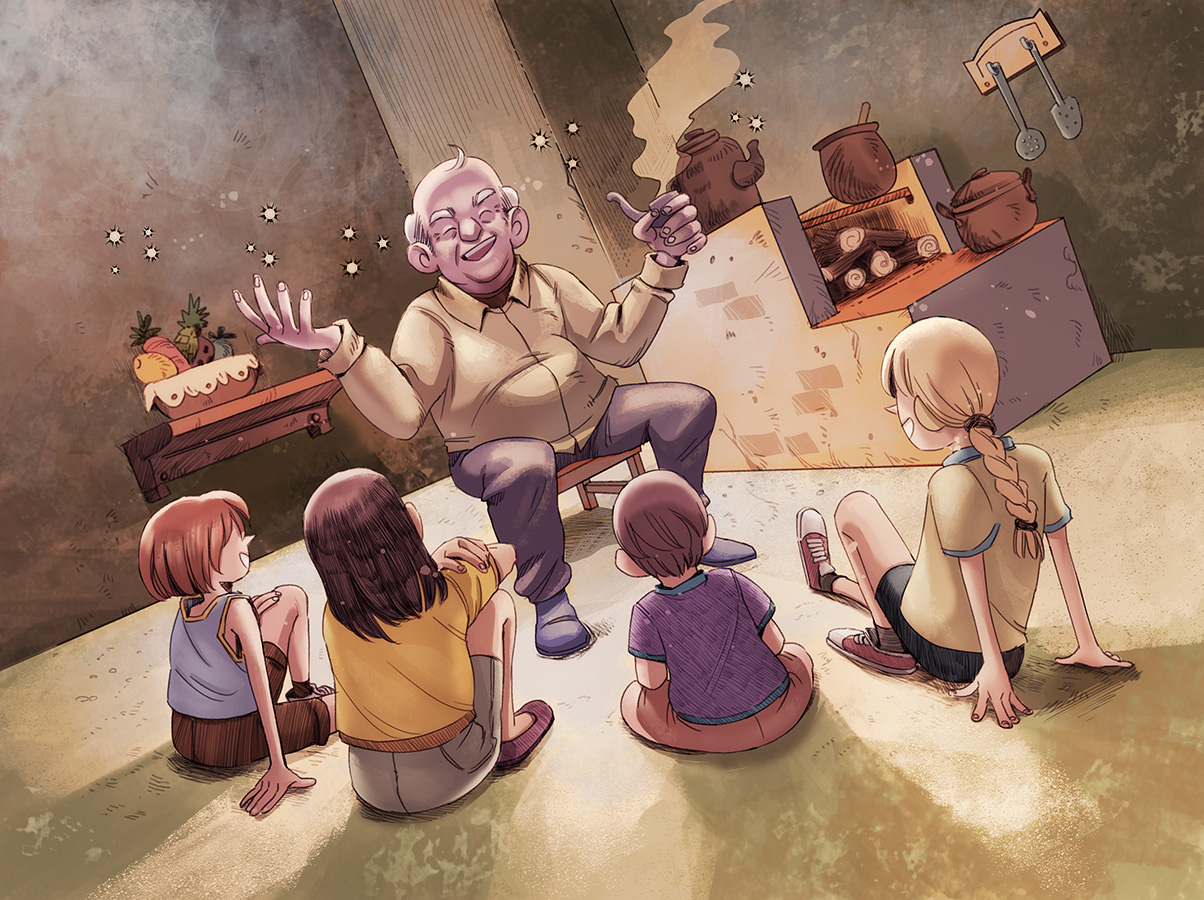
Illustration by Ju Loyola
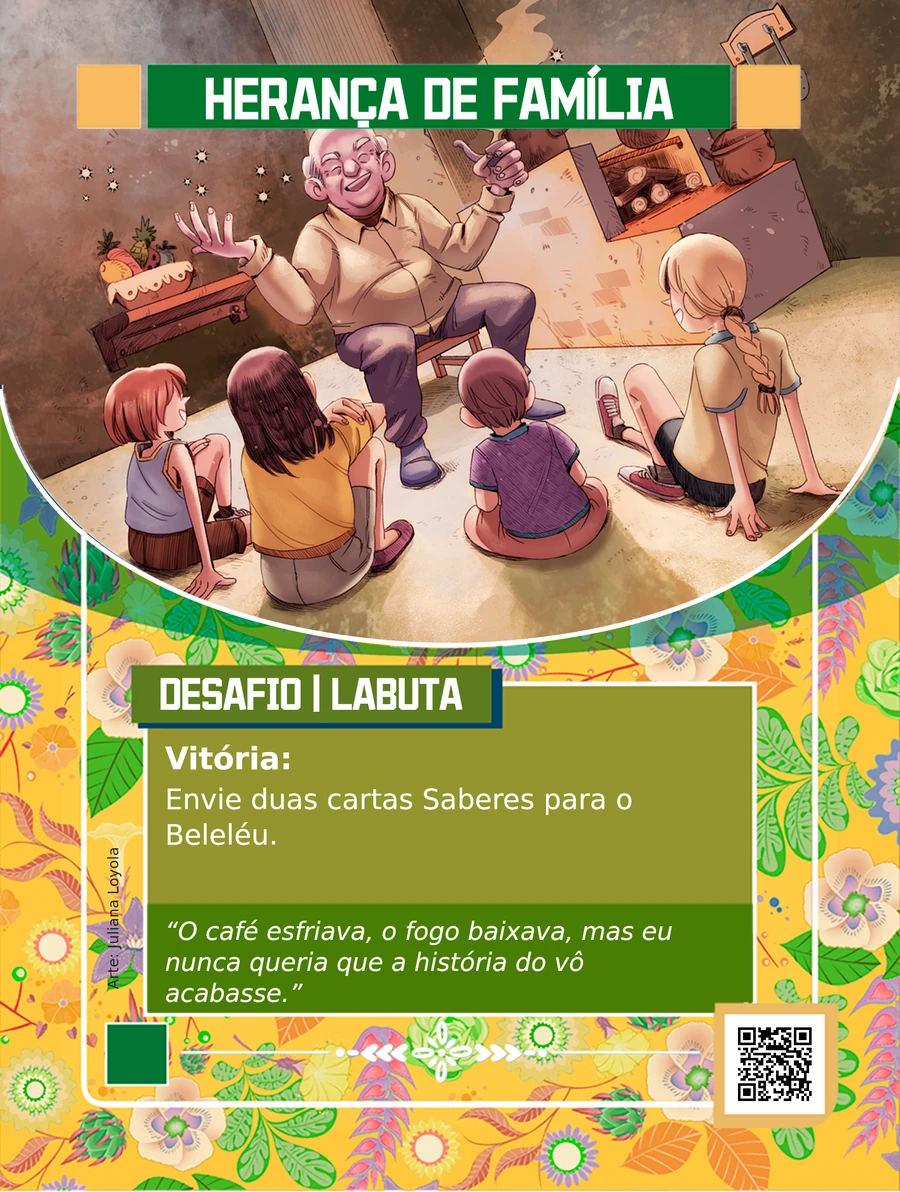
Family Heirloom
Folklore and history
What do you inherit when someone in your family leaves you a viola de cocho? You keep the instrument, of course. But what if that person also taught you how to choose the wood, carve the body of the viola, and play the first chords from it? In English, the expression cultural heritage conveys this idea of inheritance. In Portuguese, we call cultural heritage that which a community recognizes as its own and transmits to subsequent generations.
Material heritage includes buildings, urban historical complexes, works of art, and landscapes. Think of the rock shelters of Serra da Capivara, in Piauí, with their rock paintings. One of the ways to protect these assets is through listing. At the federal level, a listed asset is registered in at least one of the four Iphan Registry Books. These are the Archaeological, Ethnographic and Landscape Registry Book, the Historical Registry Book, the Fine Arts Registry Book, and the Applied Arts Registry Book. The word "tombo" has a long history in Portuguese archives. It is the same word found in the name of the Torre do Tombo, in Lisbon.
To recognize intangible heritage, Iphan has four Registry Books. In the Knowledge Registry Book, for example, are the artisanal way of making Minas cheese and the way of making the viola de cocho. Since 2025, the official name of the latter explicitly links the instrument with those who play it and dance to its sound: Making the Viola-de-Cocho Associated with the Cultural Complex of Cururu and Siriri. In the Book of Celebrations we find the Círio de Nazaré and the Festa do Senhor do Bonfim. Frevo is in the Book of Forms of Expression. The Book of Places brings together references as distinct as the Caruaru Fair and the Iauaretê Waterfall, a sacred place for the indigenous peoples of the Uaupés and Papuri rivers.
Let's go back to the viola. It is possible to take such good care of an instrument that it lasts for generations. But who will make the next viola? That's where safeguarding comes in. When a master has wood to work with, apprentices to teach, and opportunities to play with others, the knowledge remains alive. And each generation also leaves its mark on it.
In Brazil, municipalities, states, and the federal government can recognize and protect their heritage. At UNESCO, the Serra da Capivara and frevo help to understand how this works on an international scale. The park, with its archaeological sites, is part of the World Heritage List. Frevo, which takes to the streets in the music and steps of the revelers, is on the Representative List of the Intangible Cultural Heritage of Humanity.

Family Heirloom
Challenge / Toil
“The coffee would go cold, the fire would burn low, but I never wanted Grandpa’s story to end.”
Send two Lore cards to the Beleléu (your discard pile).
Download the high-resolution artwork

References
- INSTITUTO DO PATRIMÔNIO HISTÓRICO E ARTÍSTICO NACIONAL. Livros do Tombo. [s. d.]. Disponível em: www.gov.br. Acesso em: 10 nov. 2026.
- INSTITUTO DO PATRIMÔNIO HISTÓRICO E ARTÍSTICO NACIONAL. Modo de Fazer Viola-de-Cocho Associado ao Complexo Cultural do Cururu e do Siriri. Bem Brasileiro. Disponível em: https://bcr.iphan.gov.br/bens-culturais/modo-de-fazer-viola-de-cocho/. Acesso em: 12 nov. 2026.
- INSTITUTO DO PATRIMÔNIO HISTÓRICO E ARTÍSTICO NACIONAL. Promoção e Sustentabilidade dos Bens Culturais. [s. d.]. Disponível em: www.gov.br. Acesso em: 10 nov. 2026.
- INSTITUTO DO PATRIMÔNIO HISTÓRICO E ARTÍSTICO NACIONAL. Registro do Bem. Bem Brasileiro. [s. d.]. Disponível em: bcr.iphan.gov.br. Acesso em: 10 nov. 2026.
- UNESCO. Frevo, performing arts of the Carnival of Recife. Disponível em: https://ich.unesco.org/en/RL/frevo-performing-arts-of-the-carnival-of-recife-00603. Acesso em: 12 nov. 2026.
- UNESCO. Purpose of the Lists of Intangible Cultural Heritage and of the Register of Good Safeguarding Practices. [s. d.]. Disponível em: ich.unesco.org. Acesso em: 10 nov. 2026.
- UNESCO. Serra da Capivara National Park. Disponível em: https://whc.unesco.org/en/list/606/. Acesso em: 12 nov. 2026.